
- Home
- Solutions
- Safety Assessment
- Developmental and Reproductive Toxicology
Developmental and Reproductive Toxicology Services
At Inotiv, our experts are focused on supporting your product development milestones. This support includes Developmental and Reproductive Toxicology (DART) services and Juvenile Animal Studies (JAS), which are essential in identifying the potential risks of undesirable effects of your drug candidate, agrichemical product, dietary ingredient, or other chemical.
Take advantage of our expertise in providing DART study solutions that deliver the insights you need in program planning an individual study design in accordance with ICH (International Council for Harmonization) S5 (R3) and/or OECD guidelines. We provide a customized approach to meet your unique requirements as either a complete in vivo integrated program or as a stand-alone service. Additionally, as a robust Historical Control Database (HCD) is key in DART studies, we have developed and utilize an HCD for mice, rats, and rabbits (data available upon request).
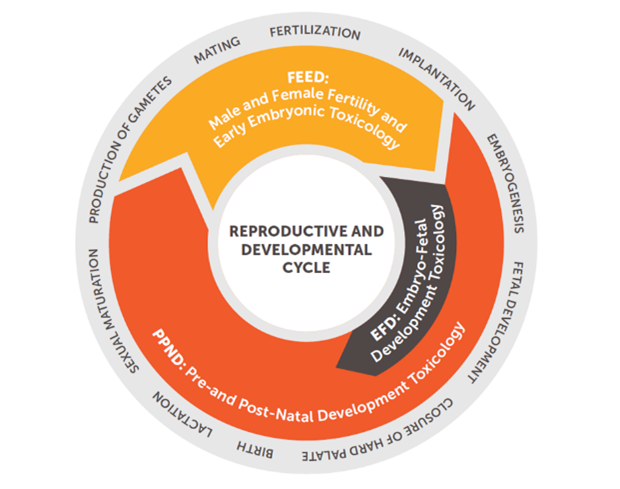


Gain the insight and expertise you need to progress to your next milestone with Inotiv’s DART and JAS service offerings
DART services
Standard or Customized Study Designs
- Fertility and Early Embryonic Development Studies for Male and/or Female (FEED, SEG I)
- Embryo-Fetal Development/Prenatal Developmental Toxicity Studies (EFD, SEG II)
- Prenatal Development and Postnatal Developmental Studies (PPND, SEG III, OECD 414)
- Combined 28-day Developmental and Reproduction Screening Test (OECD 421/422)
- Extended One-Generation Reproductive Toxicity Studies (EOGRTS, OECD 443)
- Male and Female Rat Pubertal Assays (USEPA Endocrine Disruptor Screening Program, OPPTS 890.1450/1500)
- Rat Hershberger Assay (USEPA Endocrine Disruptor Screening Program, OPPTS 890.1400, OECD 441)
- Rat Uterotrophic Assay (USEPA Endocrine Disruptor Screening Program, OPPTS 890.1600, OECD 440)
- Developmental Neurotoxicity Study (OECD 426)
- In Utero Exposure Phase for Addition to Carcinogenicity or Chronic Toxicity Studies (FDA Redbook 2000:IV.C.8)
Route of Administration
- Oral: Gavage, Dietary, Drinking Water
- Subcutaneous
- Intravenous
- Intramuscular
Species
- Mouse
- Rat
- Rabbit

Juvenile animal studies (JAS) services
Customized Study Designs
- Species selection and age for intended patient populations
- Consideration of timing of dosing, exposure, monitoring, pharmacological/toxicological differences
Route of Administration
- Oral Gavage
- Subcutaneous
- Intramuscular
Species
- Mouse
- Rat
Behavioral assessment offering
Locomotor Activity
- Models ability to navigate environment and habituation
Startle Response
- Measures reflex due to a sudden stimulus for learning and habituation
Morris Water Maze
- Studies spatial learning and memory
Functional Observational Battery (FOB)
- Detailed observation to detect changes in central nervous system, autonomic nervous system, and neuromuscular functions
.jpg?width=500&height=281&name=Presentation-Quantitative-In-Vitro-to-In-Vivo-Extrapolation-for-Developmenal-Toxicity-Potency-of-Valproic-Acid-Analogues-(1).jpg)

Frequently Asked Questions (FAQs) for Developmental and Reproductive Toxicology (DART)
When in drug development are DART Studies typically conducted?
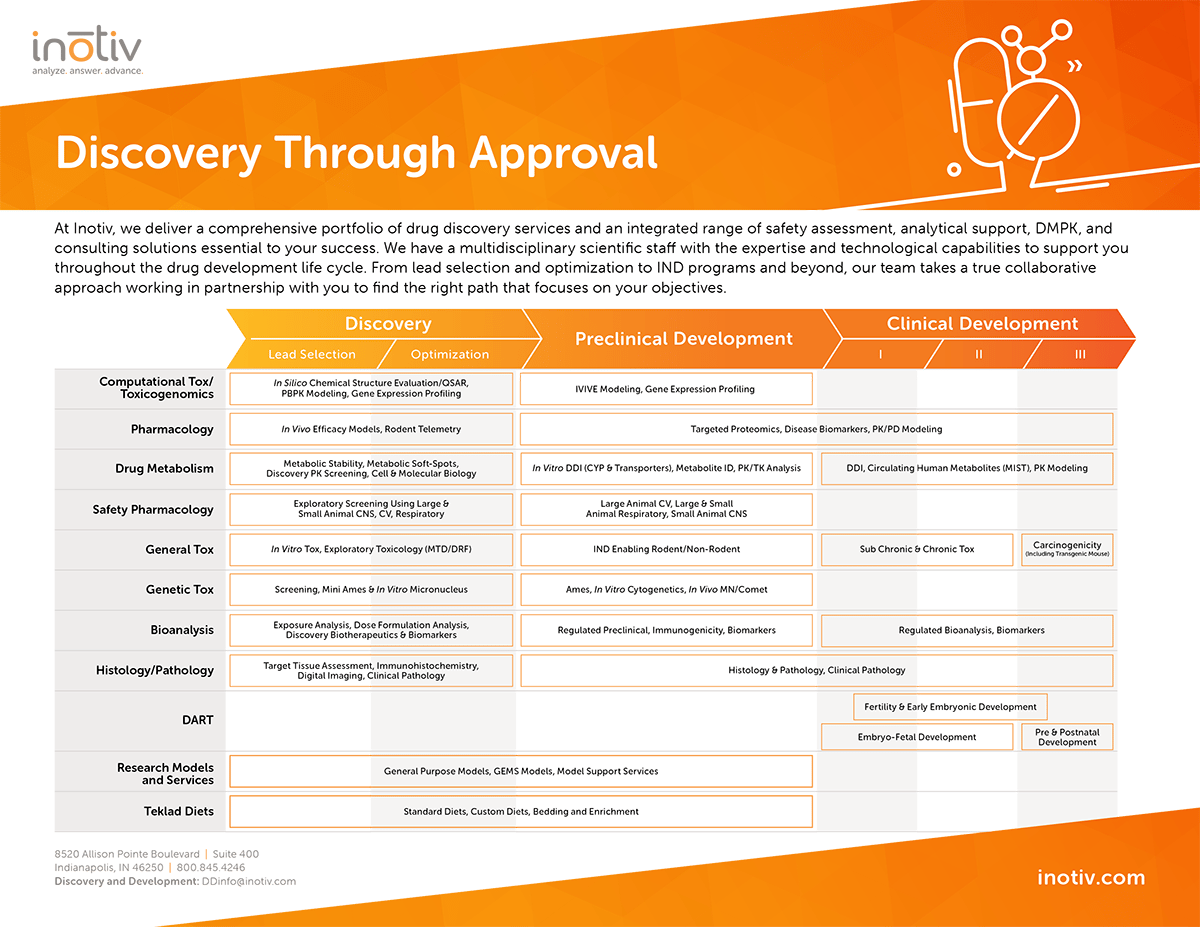
- FEED and Embryo-Fetal Development and Fetal Toxicity, (aka Seg I and Seg II): Clinical Phase II
- Juvenile Tox, EOG, PPND: typically, at Clinical Phase III; there can be exceptions based on the sponsor's needs
What type of products require DART testing?
Any product in which pregnant women, women of childbearing potential, or children may be exposed.
What types of products require JAS testing?
Any product that may potentially have a pediatric indication.
What is each DART service looking to determine?
- FEED: effects on production of gametes, mating, fertilization, and implantation
- EFD: embryogenesis, fetal toxicity and development, closure of the hard palate
- PPND: effects on or during birth, lactation, sexual maturation of offspring
- Multigeneration studies such as the OECD 443 (EOGRTS) assess all phases of the reproductive cycle and the development of subsequent generations. Functional endpoints in offspring may include neurotoxicity and immunotoxicity, as needed, based on the test substance/article
Duration of each study
- For In-life: FEED: ~60 days; EFD: ~20-30 days depending on species (mouse, rat, rabbit); PPND: ~135 days
- OECD 443 (EOGRT): 6+ months; length can vary depending on the number of generations assessed
General Toxicology

General Toxicology
Inotiv offers a range of general toxicology studies to evaluate the safety of drugs, medical devices, and other chemicals. We design and conduct studies according to international regulations and our toxicology expertise can help assess potential risks and ensure the safety of your product.
Discovery Through Approval

Discovery Through Approval
To succeed in discovery and development, you need high-quality data and painstaking interpretation to answer the right questions at the right time.
Pathology

Pathology
Access world-class anatomical, clinical, and medical device pathology services, from routine histochemistry, IHC, IF, and ISH to stereology.
Genetic Toxicology

Genetic Toxicology
Inotiv provides a complete Genetic Toxicology solution, including non-GLP screening, all required in vitro and invivo regulatory assays and follow-up/secondary testing
Consulting

Consulting
Our experts deliver the insights you deserve to get the answers you need, whether in DMPK data analysis, biomarker analysis, or bioequivalence studies.

Subscribe to updates for Inotiv
Sign up and you’ll receive the latest updates that matter to you, delivered straight to your inbox.


