- Home
- Solutions
- Safety Assessment
- Medical Device: Specialized Histology and Pathology
Medical Device: Specialized Histology and Pathology
At Inotiv, we offer customized in vivo and histopathology services for preclinical medical device programs. Our team of scientists, surgeons, and boarded veterinary pathologists provide support at every step of the way. Because every medical device is unique, we tailor each project to your specific needs and end goals of the study.
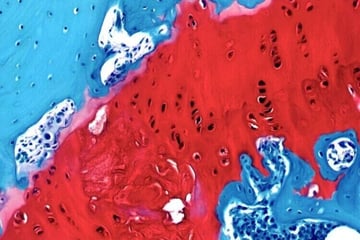
We offer a variety of histological techniques, including paraffin histology (standard and oversized slides), plastics histology (Spurr resin and Methyl Methacrylate), specialty stains, immunohistochemistry (IHC), and various decalcification procedures. Our board-certified veterinary pathologists are integral during protocol development, necropsy/tissue collection, and histology to ensure the end goals of each study are met. For more information, click on the links below:
Medical Device and Plastics Histology
Learn more
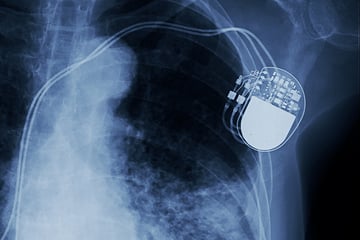
Pathology Evaluation of Medical Devices
Learn more
Medical Device Testing and Surgical Support
Learn moreMedical Device Expertise
Inotiv supports medical device studies from early phase non-GLP validation/verification testing to GLP safety and/or efficacy assessments. Our dedicated medical device team provides:
- Guidance with Study Design and Protocol Creation
- Necropsy Oversight by ACVP Board-Certified Pathologists
- Plastics and Paraffin Histology
- Histopathology Evaluation and In-Depth Reporting
- High-Quality Annotated Images & Whole Slide Scan Images
- Non-Standard & Radiograph-Guided Tissue Trimming
- Special Stains & Immunohistochemistry (IHC)
- Computerized Histomorphometry
- Image Segmentation and Object Count
Our team has experience across various therapeutic areas including, but not limited to, the following: Orthopedic, General Surgery, Wound Healing, Ablation Technologies, Gastrointestinal, Cardiovascular, Dental, Neurology, and more!
Orthopedic devices and models
- Dental implants
- Bioabsorbable and biostable implants
- Critical sized defects
- Bone filler materials
- Fracture models
- Cranial defects
- Femoral epicondylar and articular cartilage defects
- Osteoarthritis
Cardiovascular devices and models
- Intravascular stents
- Drug coated balloons
- Vascular /Vessel sealers
- Prosthetic heart valves
- Left ventricular assist devices (LVAD)
Wound healing
- Adherent and Non-Adherent Dressings
- Biological Wound Healing Products
- Anti-adhesion products
- Dermal Matrices
- Films, foams, and gels
- Hydrocolloids and Hydrogels
- Full and partial thickness wounds
Gastrointestinal devices
- Staplers
- Electrosurgical Closure / Ligation Devices
Ocular devices
- Subretinal implants
- Lens replacement
If you do not see what you are looking for in the above list, please contact us for a consultation.
Senior Scientific Director, Medical Device
Nicolette Jackson, DVM, MS, DACVP
>> Click here to learn more about our pathologists
Dr. Nicolette (Nikki) Jackson joined Inotiv in 2021 as Director of Medical Device Pathology. In 2024, Dr. Jackson was promoted to Senior Scientific Director, Medical Device and provides scientific oversight for the medical device program at Inotiv, interfacing with our clients as a key subject matter expert.
As a board-certified veterinary anatomic pathologist with extensive experience in the medical device pathology field, she specializes in orthopedic devices (both biostable and bioabsorbable), wound healing, ablation therapies, gastrointestinal devices, and cardiovascular devices with many other device types in the mix. She excels in investigating new medical device pathology techniques and enjoys working with various histology types (paraffin and plastics histology). Dr. Jackson is broadly published in the medical device field, with numerous publications, presentations, and book chapters on orthopedic, cardiovascular and medical device pathology.
Frequently Asked Specialized Histology and Pathology Questions
Which device require pathology evaluation for FDA Approval?
A wide range of medical devices can be subject to pathological examination, including:
- Implants (e.g., stents, pacemakers, joint replacements)
- Surgical instruments
- Diagnostic devices (e.g., catheters, endoscopes)
- Biomaterials (e.g., scaffolds, sutures, bone fillers)
Why does FDA require pathology evaluation of Class II and III devices?
Medical device pathology is often used to:
- Assess the biocompatibility of materials
- Evaluate the safety and/or performance of devices in vivo
- Support regulatory submissions
- Investigate adverse events or complications associated with devices
What techniques are used in medical device pathology?
Pathologists employ a variety of techniques to examine medical devices, such as the following:
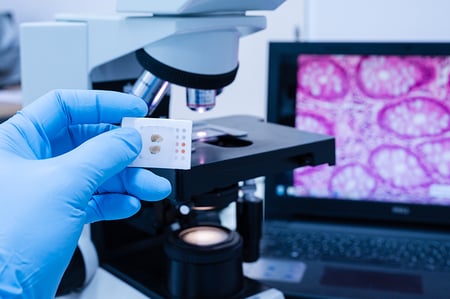
- Histology: Histologic slides are created for pathologic examination of the body’s response to the presence of the device
- Immunohistochemistry: Antibodies are utilized to detect specific antigens in tissues
- Scanning Electron Microscopy (SEM): High-resolution imaging of surface cellular structures is performed for an additional imaging modality
- Chemical Analysis: Determining the composition of materials that may be eluted from a medical device
- Micro-CT Imaging: Analysis and quantification of the 3-D structure of an implanted device and/or new bone growth within a defect site
- Fracture Analysis: Analysis of high-resolution radiographs to determine if fractures exist in a medical device
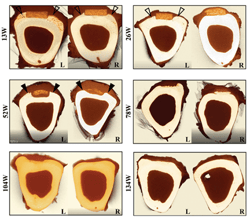
- Computerized Histomorphometry: Quantification of a 2-D region of interest within a histology slide to analyze growth parameters (e.g., amount of new bone growth within a defect site)
How can medical device pathology benefit patients and healthcare providers?
Medical device pathology can help:
- Identify potential safety issues with devices
- Improve device design and manufacturing processes
- Enhance patient care by providing valuable information about device-related complications
What is the role of a pathologist in medical device pathology?
Pathologists are responsible for:
- Examining and analyzing medical devices and associated tissues to determine the healing response
- Interpreting the findings and generating comprehensive reports that are sent to regulatory agencies for review
- Collaborating with clinicians, engineers, and regulatory experts on the development of novel medical devices
How can I learn more about medical device pathology?
- Consulting with Inotiv’s pathologist or medical device experts
- Searching online for relevant resources and publications
- Attending conferences or workshops focused on this field
What are the challenges and future directions in medical device pathology?
Challenges in Medical Device Pathology include:
- The complexity of modern devices and materials
- The need for specialized expertise and techniques
- The evolving regulatory landscape
- Future directions may involve advancements in imaging technologies and novel histology techniques
Related Specialized histology and Pathology Insights
General Toxicology

General Toxicology
Inotiv offers a range of general toxicology studies to evaluate the safety of drugs, medical devices, and other chemicals. We design and conduct studies according to international regulations and our toxicology expertise can help assess potential risks and ensure the safety of your product.
Medical Device Testing and Surgical Support
Our nonclinical testing services feature veterinary surgeons, state-of-the-art imaging, and a commitment to excellence to advance your medical device
Drug Metabolism and Pharmacokinetics (DMPK)

Whatever you need, from method development to metabolite ID, our phase-appropriate bioanalytical services help you analyze, answer, and advance.
Histology

Histology
Projects with a wide range of services. From tissue processing to digital analysis, our team delivers the quality you expect.
Consulting

Consulting
Our experts deliver the insights you deserve to get the answers you need, whether in DMPK data analysis, biomarker analysis, or bioequivalence studies.